
Loop Dungeon Incremental Cooldown Guide: Active Skill Timers, Reductions, and Boss Timing
✓ Last verified 2026-10-20 · How we check facts
Quick answer
Cooldowns gate every active skill, from Meteor to Flash Strike to the Warrior's buff. The skill tree sells reduction upgrades, and launch footage shows players saving their strongest buttons for boss fights.
Loop Dungeon Incremental cooldown timers decide how often your party's active skills go off, and in a game whose combat plays itself between upgrades, those timers carry most of your burst damage. A Mage's Meteor, a Rogue's Flash Strike, the Warrior's rallying buff, and the Archer's arrow skills all sit behind waits you can shorten on the skill tree. Because the game runs its fights automatically, working the Loop Dungeon Incremental cooldown system well is mostly a planning job: buy the right reductions, then press each big button at the right moment. This page collects what launch gameplay shows about which skills use timers, how reductions appear in the tree, and when players hold or spend their strongest actives.
Which Active Skills Sit Behind a Loop Dungeon Incremental Cooldown
In gameplay footage from the launch window, presenters bring up cooldown reductions for Flash Strike, Battle Cry, Meteor, and Archer skills. Other captions call that same Warrior buff War Cry, an unresolved transcription difference rather than a second skill. None of the clips settle exact timer values, so treat any specific number in an older demo or beta video as version-specific rather than a release specification.
| Skill | Hero | What players do with it |
|---|---|---|
| Meteor | Mage | Timed burst for large enemies and bosses; some players chase extra meteors or shorter waits |
| Flash Strike | Rogue | A full-release Rogue active shown in early full-game footage |
| Battle Cry or War Cry | Warrior | An all-hero attack and defense buff, usually saved for named fights |
| Triple Arrow | Archer | Fired into grouped enemies as a spread or multi-hit attack |
Rogue and its kit were among the additions the developer confirmed for the full release on the official Steam store page, which is why Flash Strike shows up in the newest clips and not the oldest ones.
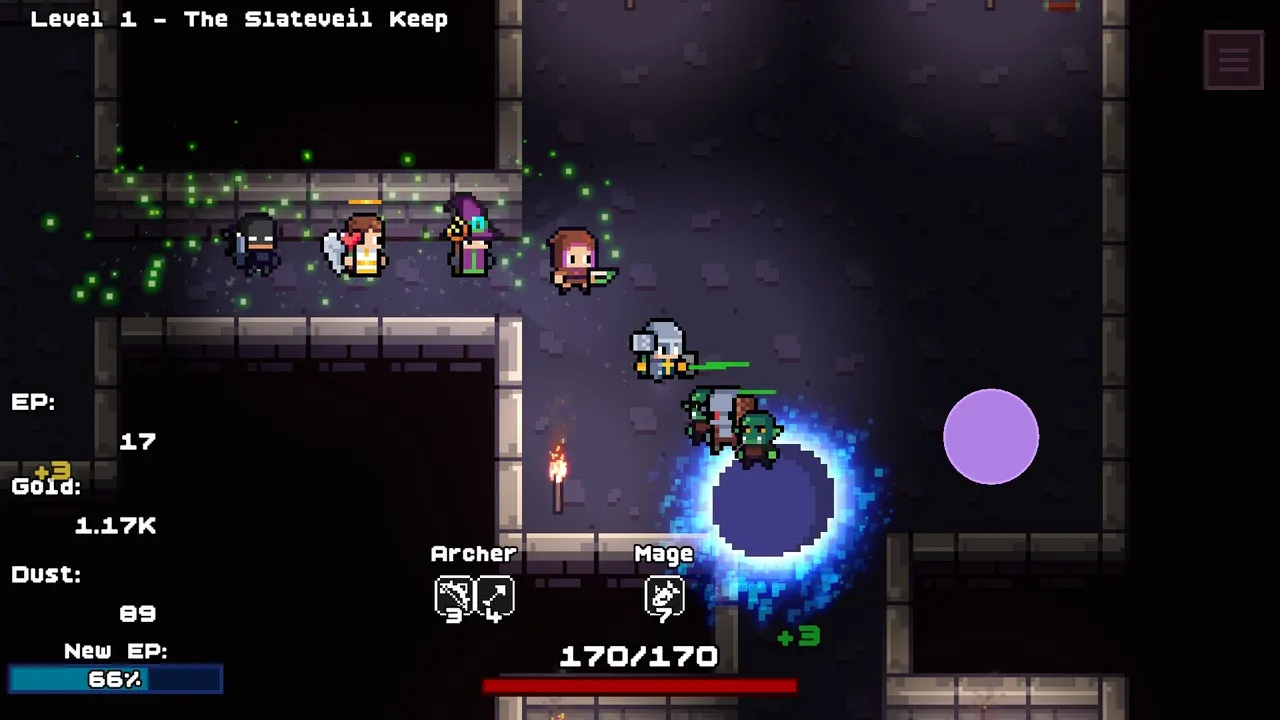
What the Tree Offers for Loop Dungeon Incremental Cooldown Reduction
The skill tree grows from basic combat and health upgrades into hero unlocks, active skills, and several currencies, and reduction nodes sit along the active-skill branches. In footage, presenters treat those nodes as a normal part of a mature build rather than a luxury. A useful habit before buying: check which active you actually press most. A shorter Meteor timer pays off in every boss attempt, while a shorter Triple Arrow timer only matters if packed waves are eating your time. Our Loop Dungeon Incremental combat hub maps the surrounding upgrades, and attack speed pairs naturally with reduction work because it keeps damage flowing between casts.
Timing Skills Around Bosses
Boss attempts are where Loop Dungeon Incremental cooldown planning pays off. The pattern in the footage is consistent: hold the short-window buttons, spend them together, and let automatic attacks carry the walk in between.
| Moment | Player habit from footage | Why it works |
|---|---|---|
| Walking in | Hold the Warrior buff | One demo readout showed +10 attack and +10 defense, and a beta clip showed a five-second duration, so the window is short |
| Boss engages | Fire Meteor into the buff | Burst overlaps the opening seconds, when every point counts |
| Long fight | Recast on rhythm | Once reductions stack, a second cast inside one boss attempt becomes realistic |
Both buff numbers are version-specific observations, not release specifications, and the same caution covers every cooldown figure in older clips. What transfers between versions is the habit itself. In this Rogue gameplay video from the launch window, the build leans on active-skill timing while the basics run themselves.
Where Priest Activate Fits
The developer officially named Activate as a full-release Priest skill that selects another hero's active skill and casts it immediately. One beta caption described its cooldown interaction imperfectly, so avoid assuming precise reset or refund rules from it. In practice, footage treats Activate as a way to pull a strong button forward the moment a boss appears, which is the same timing problem the rest of this page covers.
Common Loop Dungeon Incremental Cooldown Mistakes
Most wasted runs trace back to spending at the wrong time rather than buying the wrong node.
| Mistake | What it costs | Better play |
|---|---|---|
| Spending the buff on trash waves | Nothing left for the boss | Hold it the way footage players do, for named fights |
| Buying reductions for an unused skill | Tree points wasted | Match reduction purchases to the actives you press |
| Ignoring attack speed entirely | Slow basics between casts | Pair cooldown work with attack-speed nodes for steadier damage |
Frequently Asked Questions
Q: How does the Loop Dungeon Incremental cooldown system work?
Every active skill fires on a timer, and the skill tree sells reductions along the active-skill branches. Gameplay footage mentions reductions for Flash Strike, the Warrior buff, Meteor, and Archer skills, while exact values stay unstated, so verify each node inside your own build.
Q: Does any skill skip cooldowns completely?
Nothing in launch footage shows a timer-free skill. Priest Activate comes closest in spirit, since the developer says it casts another hero's active skill immediately, but the official post does not spell out reset rules and one beta caption got the interaction wrong.
Q: Should I buy cooldown reduction or damage upgrades first?
Players in the footage split on this, and it is strategy opinion rather than a rule. If a specific boss blocks progress, reduction plus better timing often changes the fight without new damage; if farming feels comfortable, damage upgrades raise every run at once. Our critical hit page covers the damage side.
Q: Where can I see cooldown play in action?
The Rogue gameplay video linked above is a good starting point, and the related Meteor and Battle Cry pages cover the two actives players time most carefully.
Continue exploring
Progression →
Loop Dungeon Incremental Meteor: Mage Burst Timing, Upgrades, and Boss Matchups
Loop Dungeon Incremental Meteor is the Mage burst skill. Learn timing windows, cooldown and count upgrades, and boss matchups seen in launch footage.
Progression →
Loop Dungeon Incremental Battle Cry Guide: Warrior Buff Timing and Upgrades
What the Loop Dungeon Incremental battle cry does, the demo and beta numbers in footage, and how presenters time the Warrior buff for bosses.
Heroes →
Loop Dungeon Incremental Mage Guide: Meteor Timing and Burst Windows
The Loop Dungeon Incremental Mage trades steady damage for Meteor, a timed burst active. Cooldown and count upgrades, plus the Archmage question.
Related Guides
Up next →
Loop Dungeon Incremental Critical Hit: What Launch Footage Confirms
Loop Dungeon Incremental critical hit nodes appear on several hero branches. How Rogue builds use them, what stays unproven, and smarter pick order.
Attack Speed
Loop Dungeon Incremental attack speed nodes sit on separate Warrior and Archer branches. Why presenters buy them early and what pairs well.
Aura Guide
How the Loop Dungeon Incremental aura effect works: the Priest branch's Invincibility Aura, its demo and beta window, and how players use it on bosses.
Boss Defense
Loop Dungeon Incremental boss defense is bought before Dragon and other boss attempts. When to invest, what pairs with it, what captions never show.
More in Combat
- Loop Dungeon Incremental Attack Speed: Why Faster Heroes Clear More
- Loop Dungeon Incremental Aura Guide: Invincibility Aura, Defense Windows, and Boss Prep
- Loop Dungeon Incremental Boss Defense: Survive the Dragon and Beyond
- Loop Dungeon Incremental Click Damage: Manual Hits in an Auto Battler
- Loop Dungeon Incremental Combat Guide: Every Upgrade That Shapes a Run
- Loop Dungeon Incremental Critical Hit: What Launch Footage Confirms
- Loop Dungeon Incremental Drop Rate Guide: Gold, Magic Dust, and Farming Levers
- Loop Dungeon Incremental Movement Speed: Close the Gap Before It Ends Your Run
- Loop Dungeon Incremental Prestige Explained: Resets, Rewards and Timing
- Loop Dungeon Incremental Wave Upgrades: More Enemies, More Loot, More Risk