
Loop Dungeon Incremental Progression Guide: Skill Tree, Prestige, and Builds
✓ Last verified 2026-10-20 · How we check facts
Quick answer
Loop Dungeon Incremental progression runs on a loop: clear runs, bank currencies, buy permanent tree nodes, then Prestige to keep rewards while progress resets. This hub maps every node group and links a deep dive for each.
Loop Dungeon Incremental progression is built on a rhythm: lead your party through a dungeon loop, bank what the run drops, buy permanent upgrades, and reset the run while keeping the rewards. The official description names the pillars plainly — automatic combat, party management, prestige, and permanent growth — and since the game's October 19, 2026 release by Playsect, those pillars are all live. This hub maps how Loop Dungeon Incremental progression fits together and links a dedicated guide for every node group, so you can jump straight to the branch you are shopping for.
How Loop Dungeon Incremental Progression Fits Together
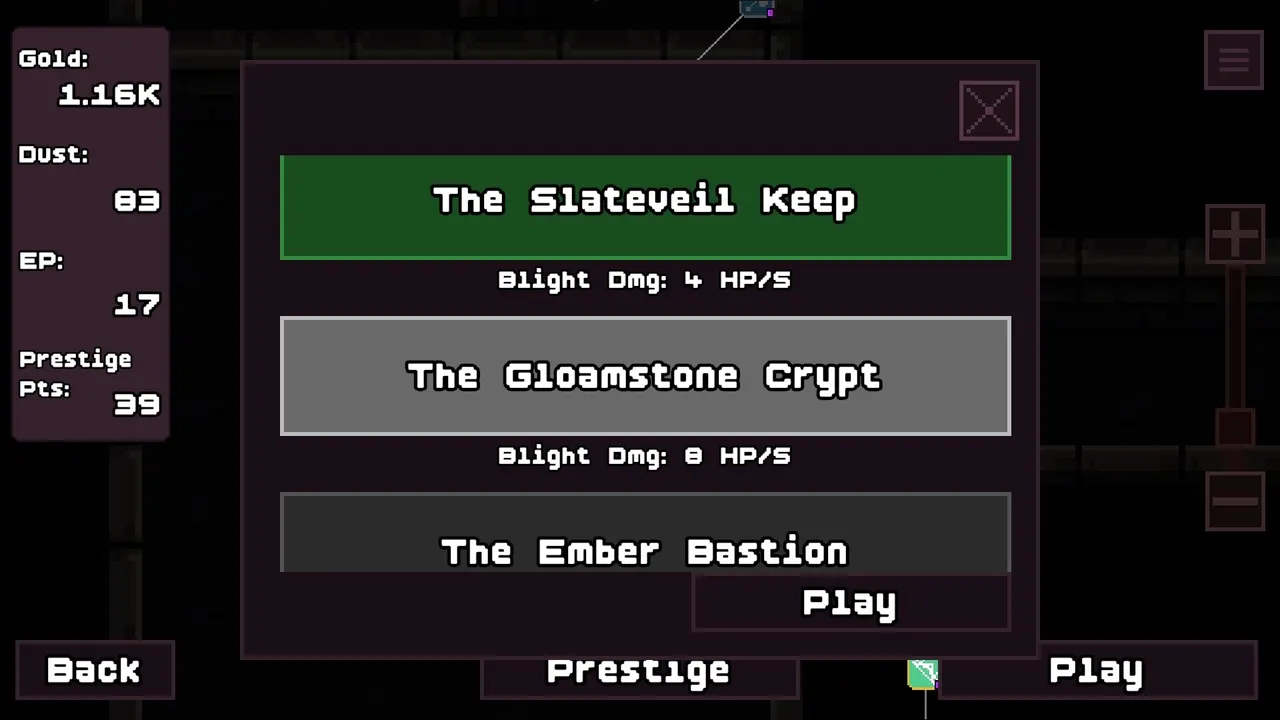
Three layers stack on top of each other. The run layer is what you watch: waves, chests, bosses, and loot. The tree layer is where run income becomes permanent power through skill-tree nodes paid in several currencies. The reset layer is Prestige, which clears run progress while prestige rewards remain, according to the confirmation captured in gameplay footage. Every good build decision is really a question about one of those layers, and every article on this site slots into one of them.
| Pillar | What it does | Deep dive |
|---|---|---|
| Skill tree nodes | Turn run income into permanent upgrades | Skill Tree |
| Prestige resets | Reset the run, keep prestige rewards | Prestige |
| Clear-level gates | Lock later nodes behind cleared levels | Clear Levels |
| Active skills | Hero abilities you trigger during runs | Battle Cry |
The Skill Tree and Its Currency Nodes
The skill tree is the spine of the whole system. In demo and beta footage it branches from basic combat and health upgrades into hero unlocks, active skills, and multiple currencies, with some nodes gated behind prerequisites or clear-level progress. A June developer announcement added tooltip information for skill-node upgrade costs, which makes comparison shopping far easier than it was in the earliest clips. The early nodes recorded most often are the quiet workhorses of any build:
| Node | Footage note | Guide |
|---|---|---|
| Vitality | Early maximum party health, one demo tooltip read plus 20 per level | Vitality |
| Iron Skin | Defensive armor pick in demo runs | Iron Skin |
| Haste | Listed near other early progression upgrades | Haste |
| Golden Hand | Bonus Gold per click, separate from Click Damage | Golden Hand |
Other nodes that shape progression live in adjacent categories: attack speed and cooldown nodes in the combat hub, click damage for manual starts, and the dust-side economy covered by the Magic Dust and Dust Magnet guides. Loop Dungeon Incremental progression feels slow in the first hour precisely because these income nodes have not compounded yet.
Clear Levels and Prestige: The Reset That Powers Permanent Growth
Clearing the first level is shown to make Prestige available, and later clear-level gates appear deeper in the tree, so clear levels act as both milestones and keys. The Prestige confirmation states that run progress resets while prestige rewards remain, which is the engine of long-term growth: every reset trades a disposable run for permanent points. Presenters disagree about timing — one resets as soon as possible, another postpones to grab more upgrades first — and that disagreement is strategy opinion, not a rule. What matters is reading your own tree before each reset and knowing which nodes your next loop needs. For the full reset mechanics, see the Prestige guide, and for a smooth example of reset chains in practice, watch a smooth-Prestige progression session.
Hero Unlocks and Active Skills
The release added more heroes and skills, and the developer announcement specifically confirmed Rogue as a damage-focused hero with Blink Attack and gave Priest a skill called Activate. In captured gameplay, the active skills are what turn a passive loop into a managed fight, and each one has a dedicated guide:
| Skill | Branch | What footage shows |
|---|---|---|
| Battle Cry | Warrior | Party-wide attack and defense buff, usually saved for bosses |
| War Cry | Warrior | Same-looking buff under a second caption name |
| Triple Arrow | Archer | Spread shots for grouped enemies |
| Piercing Arrow | Archer | Shots that pass through multiple enemies |
| Meteor | Mage | Timed burst damage for big targets |
| Invincibility Aura | Priest | Short protective window that carries boss attempts |
| Priest Activate | Priest | Casts another hero's active skill immediately |
Two naming notes before you shop. Some captions call the Warrior buff War Cry instead of Battle Cry; treat that as an unresolved transcription conflict rather than a confirmed second skill, since the two captions describe the same-looking effect. Cooldown reductions are mentioned in gameplay for several of these skills, but exact values are not established, so plan around the button's own tooltip.
Shopping order among these skills is less settled than the rest of the tree. Presenters who push bosses early grab the Warrior buff or the Priest window first, while farming-focused runs lean on the Archer's arrows and Meteor for throughput. That is a key reason Loop Dungeon Incremental progression rewards finishing one hero's branch at a time: the announcement confirmed more heroes and skills than any single captured run shows, so your own tree will eventually offer options the footage never reached.
A Simple Order of Play
| Phase | Focus | Why it works |
|---|---|---|
| First loops | Basic combat, health, and income nodes | Cheapest permanent power per currency |
| First clear | Unlock Prestige and read the confirmation | You learn what survives a reset |
| Early Prestige | Hero unlocks and active skills | Widens what each loop can attempt |
| Boss pushes | Defense, healing, and timed buffs | Bosses check defense and timing, not just damage |
This order matches what most recorded runs do, but it is a frame, not a law. The loop structure forgives experimentation, because a bad run still pays something into the tree. One habit separates smooth accounts from stuck ones: writing the shopping list before the run instead of during it. Loop Dungeon Incremental progression punishes impulse purchases less than most games — a wrong buy still feeds permanent growth — but a planned buy compounds from the very next loop, which is exactly what an incremental game is for.
Frequently Asked Questions
Q: How does Loop Dungeon Incremental progression survive a Prestige reset?
Run progress resets while prestige rewards remain, per the in-game confirmation shown in footage. Permanent power lives in the skill tree and prestige rewards, so a reset costs time, not your build. The safe habit is buying income nodes early so each new loop recovers quickly.
Q: What should I unlock first in the skill tree?
Footage consistently shows early purchases in basic combat, health, and currency-income nodes before hero-specific branches. Those nodes compound across every future loop, which is why presenters buy them first.
Q: Where do bosses fit into progression?
Bosses such as the Dragon gate both loot and later tree progress, and players prepare with health, defense, healing, and timed buffs like Battle Cry. The bosses hub links every boss guide, and the guide hub covers build basics end to end.
Q: Is there an end to progression?
The release ships more heroes, skills, bosses, and levels than the demo, but no official endpoint has been published for the loop system. Treat the tree as the long game and each Prestige as a fresh lap on a faster track.
Continue exploring
Items →
Loop Dungeon Incremental Experience Guide: EP Costs, Tree Nodes, and Farming
How Loop Dungeon Incremental experience works: where EP shows up in the skill tree, how it compares with Gold and Magic Dust, and what to buy first.
Items →
Loop Dungeon Incremental Treasure Chest Guide: Gold, Dust, and Loop Value
What a Loop Dungeon Incremental treasure chest holds, when chests appear in runs, and how Gold and Magic Dust payouts become tree upgrades.
Items →
Loop Dungeon Incremental Dust Magnet Guide: Drop Rate, Unlock, and Value
What the Loop Dungeon Incremental dust magnet node does, what the beta tooltip number was, and how to decide when dust drop rate upgrades are worth buying.
Related Guides
Up next →
Loop Dungeon Incremental Skill Tree Guide: Nodes, Costs, and Buy Order
How the Loop Dungeon Incremental skill tree is organized: node groups, currency costs, clear-level gates, and a sensible buy order for your first loops.
Battle Cry Timing
What the Loop Dungeon Incremental battle cry does, the demo and beta numbers in footage, and how presenters time the Warrior buff for bosses.
Clear Levels Gates
Loop Dungeon Incremental clear levels gates explained: how the first clear unlocks Prestige, what tree nodes stay locked, and how to plan your loops.
Golden Hand Gold
How the Loop Dungeon Incremental Golden Hand upgrade works, how it differs from Click Damage, and when bonus gold per click pays off in runs.
More in Progression
- Loop Dungeon Incremental Battle Cry Guide: Warrior Buff Timing and Upgrades
- Loop Dungeon Incremental Clear Levels: Gates, First Prestige, and Progress Order
- Loop Dungeon Incremental Golden Hand: Gold Per Click, Tree Placement, and Value
- Loop Dungeon Incremental Haste: What the Skill Tree Node Shows Right Now
- Loop Dungeon Incremental Invincibility Aura Guide: Boss Survival Timing
- Loop Dungeon Incremental Iron Skin: What the Armor Upgrade Does and When to Buy It
- Loop Dungeon Incremental Meteor: Mage Burst Timing, Upgrades, and Boss Matchups
- Loop Dungeon Incremental Piercing Arrow Guide: Line Damage and Buff Combos
- Loop Dungeon Incremental Priest Activate Guide: Chain Your Hero Skills
- Loop Dungeon Incremental Skill Tree Guide: Nodes, Costs, and Buy Order
- Loop Dungeon Incremental Triple Arrow Guide: Spread Damage for Crowds
- Loop Dungeon Incremental Vitality: Party Health Upgrades and Boss Survival
- Loop Dungeon Incremental War Cry: The Warrior Buff and Its Battle Cry Name Conflict