
Loop Dungeon Incremental Builds: Spending Order, Parties, and Prestige
✓ Last verified 2026-10-20 · How we check facts
Quick answer
Spend Gold on early damage and survival, unlock heroes as the tree opens, then let Magic Dust and Prestige Points carry the late tree. Every loop should end with the build stronger.
Strong Loop Dungeon Incremental builds are less about one perfect setup and more about spending each currency in the right order. This page collects the build patterns launch and pre-launch footage actually shows — Warrior front lines, Priest sustain, Archer piercing, Rogue crits, Meteor bursts — and turns them into a plan you can copy on day one. Treat these Loop Dungeon Incremental builds as templates rather than laws: the tree gates nodes behind prerequisites and clear-level progress, so your branch order will bend to what is unlocked. The game shipped on October 19, 2026 as a complete release, which means Rogue setups below are full-release content, not demo speculation. If you are checking any of this against the store, the official Steam store page lists the current price and news. Everything else here carries its footage source the same way the rest of this Loop Dungeon Incremental guide does.
Loop Dungeon Incremental Builds Start in the Skill Tree
The tree is the build. Footage shows it branching from basic combat and health upgrades into hero unlocks, active skills, and multiple currency pools, with nodes gated behind prerequisites or clear-level progress. A June 22 developer announcement added skill-node upgrade-cost tooltips, so the game now tells you what a node costs before you commit — read those tooltips before every purchase, because a build plan that ignores costs is just a wish list.
The spending rhythm the footage agrees on: early Gold goes into damage and survival so runs stop stalling, hero unlocks come next because each hero adds a new upgrade line, and the dedicated Magic Dust and prestige branches absorb the later surplus. The skill tree page maps the branches in detail.
Hero Roles the Footage Agrees On
Every strong party in the footage is a variation on the same five roles, which is why the Loop Dungeon Incremental heroes hub organizes the roster this way too.
| Hero | Observed role | Signature tools |
|---|---|---|
| Warrior | Front line that holds waves while ranged heroes work | Separate attack, defense, and attack-speed nodes |
| Priest | Sustain that keeps health ahead of the drain | Team healing and the Invincibility Aura branch |
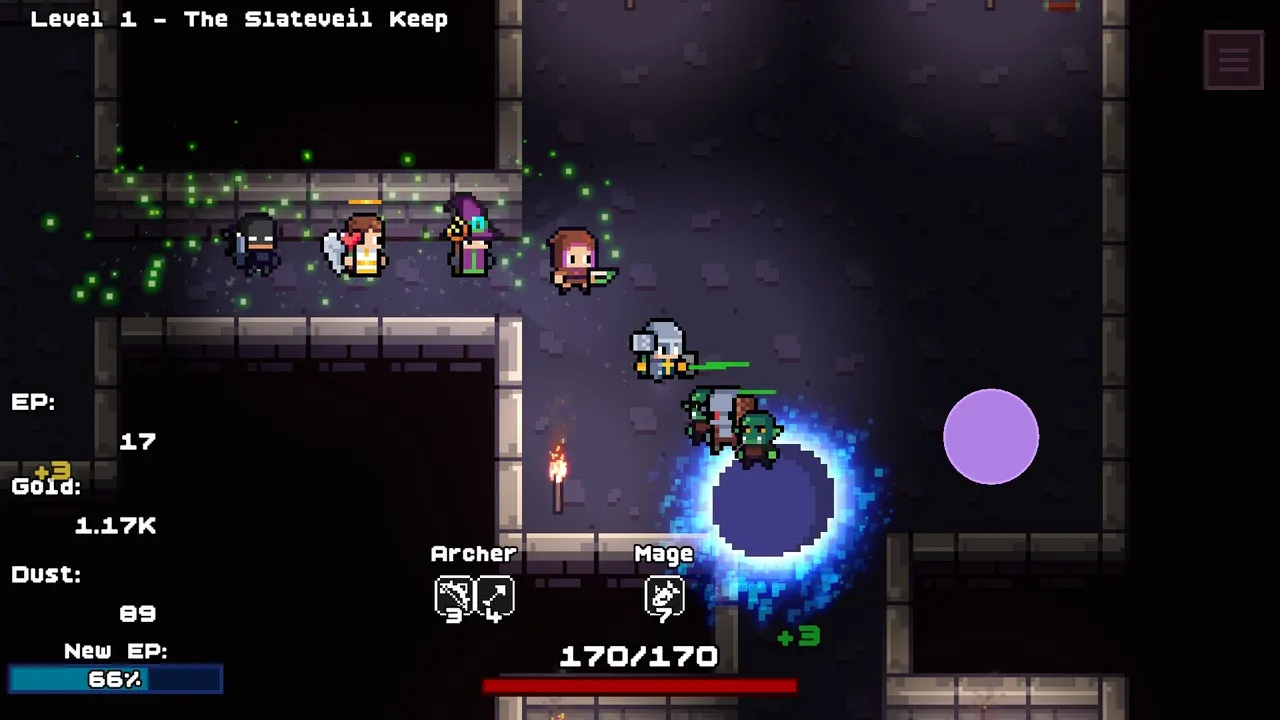
| Archer | Ranged damage from behind the front line | Triple Arrow and Piercing Arrow |
| Rogue | Full-release spike damage | Blink Attack, Flash Strike, crit and clone setups |
| Mage | Timed burst on elites and bosses | The Meteor active |
No official class list assigns these roles, so read the table as observed team usage: presenters repeatedly describe and use the heroes this way, and no run in the footage contradicts it.
Three Build Patterns From Launch Footage
When presenters stop talking about single nodes and start talking about builds, Loop Dungeon Incremental builds converge on three recognizable patterns.
| Pattern | Core picks | Best for |
|---|---|---|
| Crit Rogue | Critical-damage nodes, clone setups, an active-skill rotation | Spike damage on bosses and elites |
| Meteor Mage | Meteor with cooldown and meteor-count upgrades | Timed bursts on large enemies |
| Piercing Archer | Piercing Arrow, Triple Arrow, Archer attack speed | Dense waves and sustained farming |
The crit Rogue pattern shows up in later footage as critical-damage, clone, and active-skill setups used together. The Meteor Mage pattern is documented across several presenters who time Meteor against big enemies and upgrade its cooldown or count. The Piercing Archer pattern is the oldest one on the list: demo footage already shows Piercing Arrow passing through multiple enemies, and one presenter combined it with the Warrior buff for a boss attempt, so treat that combo as something seen in at least one run rather than a settled meta pick. For the whole rhythm in motion, a beta-build hero-upgrade run shows a party being pushed toward the hardest dungeons.
Spending Prestige Points Without Wasting Loops
Prestige rewards are the multipliers that make later loops fast, but the footage refuses to agree on when to press the button: one presenter prestiges as soon as it opens, another banks upgrades first. Both produced working builds, so the honest advice is directional, not numeric. Enter prestige with a spending plan — the reset only pays if you know which nodes the rewards will buy next. The prestige page breaks down the reset itself; this section stays on the spending side.
Two nodes earn special mention before any boss attempt. Players in demo, beta, and launch footage invest in Boss Defense before Dragon and later boss tries, reporting longer survival in their own runs. Vitality appears as an early maximum-party-health upgrade, and one demo tooltip read plus 20 max HP per level — a number that belongs to the demo build, so re-check it in your own tree before trusting it. That discipline is what separates Loop Dungeon Incremental builds that stall from builds that snowball.
| Mistake | Why it hurts | Do this instead |
|---|---|---|
| Ignoring Boss Defense until the Dragon | Boss attempts stall and waste loops | Invest before the attempt, as the footage does |
| Trusting demo or beta numbers blindly | Values may have changed by release | Re-check tooltips in the shipped tree |
| Prestiging with no plan | The reset buys nothing | Enter prestige with the next nodes chosen |
Frequently Asked Questions
Q: Do Loop Dungeon Incremental builds survive a prestige reset?
The skill-tree side does: prestige resets run progress while prestige rewards remain, and purchased nodes stay purchased. One wrinkle is worth knowing — players on the Steam forums report a full-game save showing a locked skill after prestige, with the poster specifically mentioning Mage. Treat that as an unresolved user report and check your own tree after your first reset.
Q: What is the best early spending order for Gold?
The pattern in successful footage runs is damage and survival first, hero unlocks second, drop improvements third. That order keeps runs completing while the income upgrades come online, and it leaves flexibility once the dust and prestige branches open. The gameplay page covers where that income actually comes from.
Q: Are Loop Dungeon Incremental builds different in the demo?
Meaningfully, yes. The demo tree ends earlier and lacks Rogue entirely, since demo footage explicitly labels Rogue as full-version content. Demo builds are good practice for the spending rhythm, but expect the full-release tree to open lines the demo never showed, which the builds here account for.
Q: Do I need all five heroes before a build works?
No. Footage shows working parties well before the roster fills out — a Warrior front line with one ranged damage hero sustains early loops. The five-role table is the end state, not the entry fee, and the heroes hub links the unlock details for each.
Continue exploring
Heroes →
Loop Dungeon Incremental Rogue Guide: Blink Attack, Flash Strike, Crit Builds
The Loop Dungeon Incremental Rogue is the full-release damage hero: Blink Attack officially, with Flash Strike and crit and clone setups in footage.
Heroes →
Loop Dungeon Incremental Priest Guide: Healing, Activate, and the Aura
The Loop Dungeon Incremental Priest keeps the party alive and fires other heroes' skills with Activate. Healing numbers and aura timing inside.
Related Guides
Up next →
Loop Dungeon Incremental Crash Wont Load: Official Fixes and Save Transfer
The Loop Dungeon Incremental crash wont load problem traced to Smart App Control, with official workarounds, community reports, and save transfer rules.
Gameplay Loop
How Loop Dungeon Incremental gameplay flows at launch: automatic combat, click assists, treasure chests, wave upgrades, and what prestige changes.
Starter Guide
This Loop Dungeon Incremental guide explains the full loop: auto-combat runs, Gold and Magic Dust, hero unlocks, prestige spending, and launch crash fixes.