
Loop Dungeon Incremental Gameplay Guide: What One Run Looks Like
✓ Last verified 2026-10-20 · How we check facts
Quick answer
A run walks your party through a dungeon while automatic combat resolves the fights. Clicking assists early, chests pay Gold and Magic Dust, and every loop banks permanent skill-tree progress.
Every run in Loop Dungeon Incremental follows the same rhythm: your party walks, the fight resolves itself, and the loot rolls into permanent upgrades. This page breaks Loop Dungeon Incremental gameplay down phase by phase, from the first click to the first prestige, using only what launch and pre-launch footage actually shows. The game shipped on October 19, 2026 as a complete release, so nothing here depends on a demo boundary. If you want spending strategy instead of moment-to-moment play, the builds page covers that; this Loop Dungeon Incremental gameplay guide stays on the run itself, as the third leg of the Loop Dungeon Incremental guide hub. Watching one full party run makes the rhythm obvious in about a minute, which is why a full-version party run is referenced at the bottom of this page.
What a Single Run Looks Like
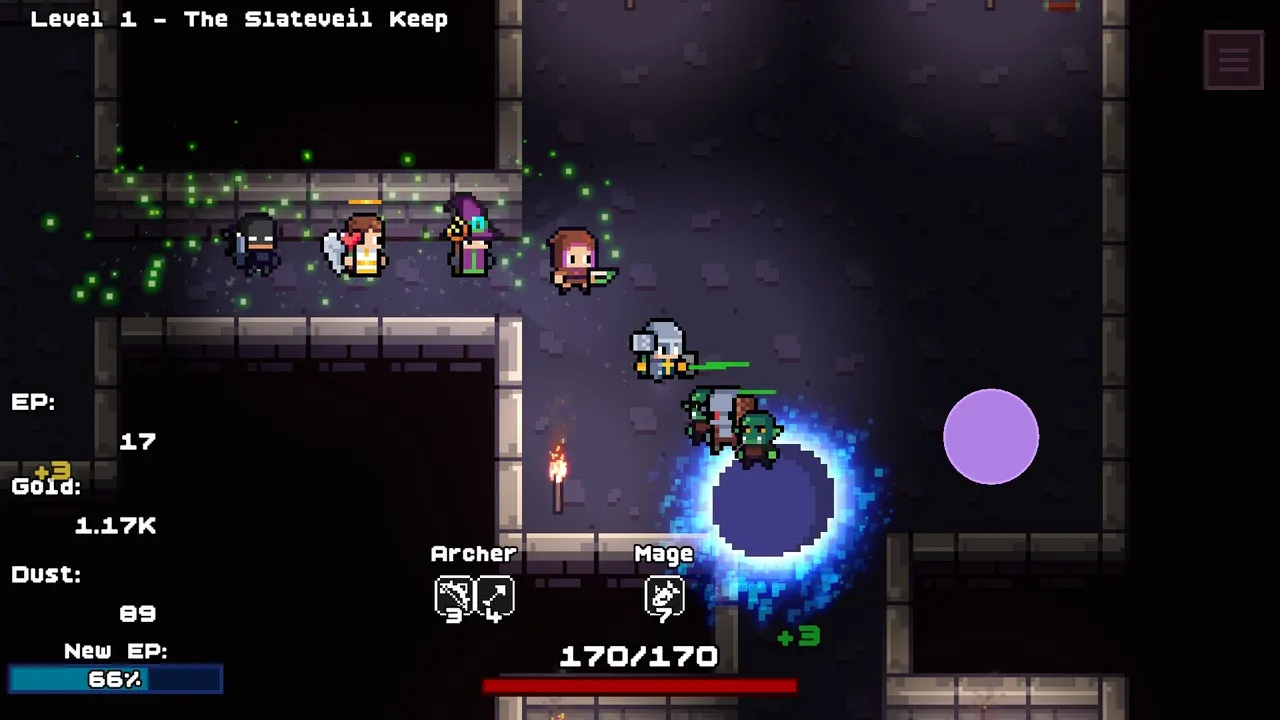
Across footage from the demo builds through launch day, runs share the same skeleton. Treasure chests are collected during dungeon runs and described as sources of Gold and, in some runs, Magic Dust, so the route you walk doubles as your income.
| Phase | What happens | What to watch |
|---|---|---|
| Push | The party advances and automatic combat resolves each wave | Health drain and wave density |
| Loot | Gold, Magic Dust, and treasure chests drop along the route | Whether chests paid Dust in that run |
| Spend | Tree purchases land mid-run or between runs | Which currency each node costs |
| Boss check | A boss such as the Dragon tests defense, healing, and saved buffs | Whether your buff is on cooldown |
| Reset or continue | Keep pushing, or prestige once it is available | What prestige keeps versus resets |
The loop only feels slow in the first ten minutes. Once drop upgrades and hero unlocks stack, presenters in launch footage are spending mid-run without stopping, which is the tell that a build is coming together.
Clicking, Auto-Combat, and Assist Play
Official material names automatic combat as a headline feature, and footage shows the texture Loop Dungeon Incremental gameplay builds around it. The opening party contains a Warrior, and presenters manually click to assist the automatic attacks while the front line holds. Early footage shows manual clicking first, then automatic targeting and nearby pickup nodes arriving through tree upgrades, so the game sands its own rough edges as you progress.
| Assist tool | What footage shows |
|---|---|
| Click Damage | Manual clicks add damage, a separate early upgrade from Warrior attack |
| Golden Hand | A bonus-Gold-per-click upgrade, distinct from Click Damage |
| Auto targeting and pickup | Later nodes remove the need to click every target and chest |
That separation matters for spending: the click-damage page and the gold page cover the two lines that make early manual play pay. Several presenters also run the Warrior as the front line while ranged heroes attack from behind; that is observed team usage rather than an official role label, but it is consistent across enough runs to plan around.
How Loop Dungeon Incremental Gameplay Changes After Prestige
Clearing the first level makes Prestige available, and the confirmation shown in demo and beta footage states the deal plainly: run progress resets while prestige rewards remain. Everything already bought in the skill tree stays bought, so prestige converts time into a permanent multiplier on every future loop.
Timing is the one place presenters genuinely disagree. One recommends prestiging as soon as it opens; another postpones it to buy more upgrades first. Both approaches appear in successful runs, so treat the debate as strategy opinion rather than a rule, and see the prestige page for the full trade-off. After the first reset, later clear-level gates appear in the tree, giving each new loop a fresh target.
Waves, Drops, and the Farming Trade-Off
Two upgrade choices define the farming side of Loop Dungeon Incremental gameplay. Enemies per Wave plus one is shown as an upgrade that presenters pick to produce more resources, while noting it can make encounters take longer or get harder. Movement Speed is picked to reach enemies and bosses faster before health-drain effects end a run. Both trade tempo for value, and both are documented across multiple runs.
| Choice | Upside | Trade-off |
|---|---|---|
| More enemies per wave | More kills, Gold, and Dust per route | Fights last longer and hit harder |
| Movement Speed | Faster routes, earlier boss attempts | Nodes spent here are not spent on damage |
| Drop-rate upgrades | Better Gold and Dust income | Exact values differ between footage and builds |
That last row is the honest caveat: Gold and Dust drop-rate upgrades are shown in the tree, but their values differ by footage and build, so no fixed rate is published on this site. The wave and drop-rate pages follow the same evidence rules.
Frequently Asked Questions
Q: How long does a run take in Loop Dungeon Incremental?
Footage shows presenters completing several loops in a single sitting, and runs are clearly designed to be interruptible. The developer's July 10 announcement added background running, so a run can continue while you do something else, and sessions flex around whatever time you have.
Q: Do I actually control the fights?
Only partly, by design. Automatic combat is an official feature, and the observed control layer is clicking to assist damage early, with tree upgrades automating targeting and pickups later. The Loop Dungeon Incremental gameplay pattern is: hands-on first hour, increasingly hands-off after that.
Q: Where can I see Loop Dungeon Incremental gameplay before buying?
The official site and the Steam store page both show the game running, and a full-version party run recorded at launch shows an entire loop cycle without cuts. Between those and the demo page, you can watch before deciding.
Q: What is the single biggest gameplay mistake new players make?
Hoarding. Presenters who stall are almost always sitting on unspent Gold while the front line dies to a wave they could have out-scaled. Spend early, spend often, and let the tree compound; that habit fixes most struggling runs before any build advice does.
Continue exploring
Heroes →
Loop Dungeon Incremental Mage Guide: Meteor Timing and Burst Windows
The Loop Dungeon Incremental Mage trades steady damage for Meteor, a timed burst active. Cooldown and count upgrades, plus the Archmage question.
Heroes →
Loop Dungeon Incremental Archer Guide: Triple Arrow, Piercing Arrow, Speed
The Loop Dungeon Incremental Archer brings ranged damage: Triple Arrow for packs, Piercing Arrow for lines, attack-speed nodes, and the Ranger question.
Related Guides
Up next →
Loop Dungeon Incremental Guide: Loops, Heroes, Builds, and Prestige Basics
This Loop Dungeon Incremental guide explains the full loop: auto-combat runs, Gold and Magic Dust, hero unlocks, prestige spending, and launch crash fixes.
Builds Guide
Loop Dungeon Incremental builds explained: skill-tree spending order, hero roles, crit and Meteor setups, and what prestige resets change.
Crash Fixes
The Loop Dungeon Incremental crash wont load problem traced to Smart App Control, with official workarounds, community reports, and save transfer rules.