
Loop Dungeon Incremental Rogue Guide: Blink Attack, Flash Strike, Crit Builds
✓ Last verified 2026-10-20 · How we check facts
Quick answer
Rogue joined at full release as a damage-focused hero with Blink Attack. Footage shows Flash Strike, critical-damage nodes, and clone setups doing the heavy lifting.
The Loop Dungeon Incremental Rogue is the hero the full release added for players who like damage numbers that spike. Playsect's launch announcement describes Rogue officially as a damage-focused hero with Blink Attack, and demo footage had already flagged the hero as full-version content, so Rogue is the clearest answer to the question of what changed between the demo and launch. This page covers what the Loop Dungeon Incremental Rogue brings, the crit and clone setups later footage shows, and how a Rogue build comes together inside a party that still needs a front line and a healer. Every claim below carries its source tier, and anything seen in only one run is labeled that way. The release itself lives on the official Steam store page.
The Loop Dungeon Incremental Rogue Is Full-Release Content
The boundary is unusually well documented. Demo footage explicitly labels Rogue as full-version content, so demo players planning around it were looking at a locked door. Early full-game footage then calls Rogue new and shows Flash Strike in action — two independent observations from two different builds that agree with each other and with the developer's announcement.
| Source tier | What it establishes |
|---|---|
| Official announcement | Rogue is a damage-focused hero with Blink Attack |
| Demo footage | Rogue is labeled full-version content, absent from the demo |
| Early full-game footage | Rogue called new; Flash Strike shown in play |
For demo veterans, that makes Rogue the headline of the upgrade to the full game: a whole damage archetype, not just a new node line. The demo page explains the transfer rules if your save is making the same jump.
Crit, Clones, and Active Rotations
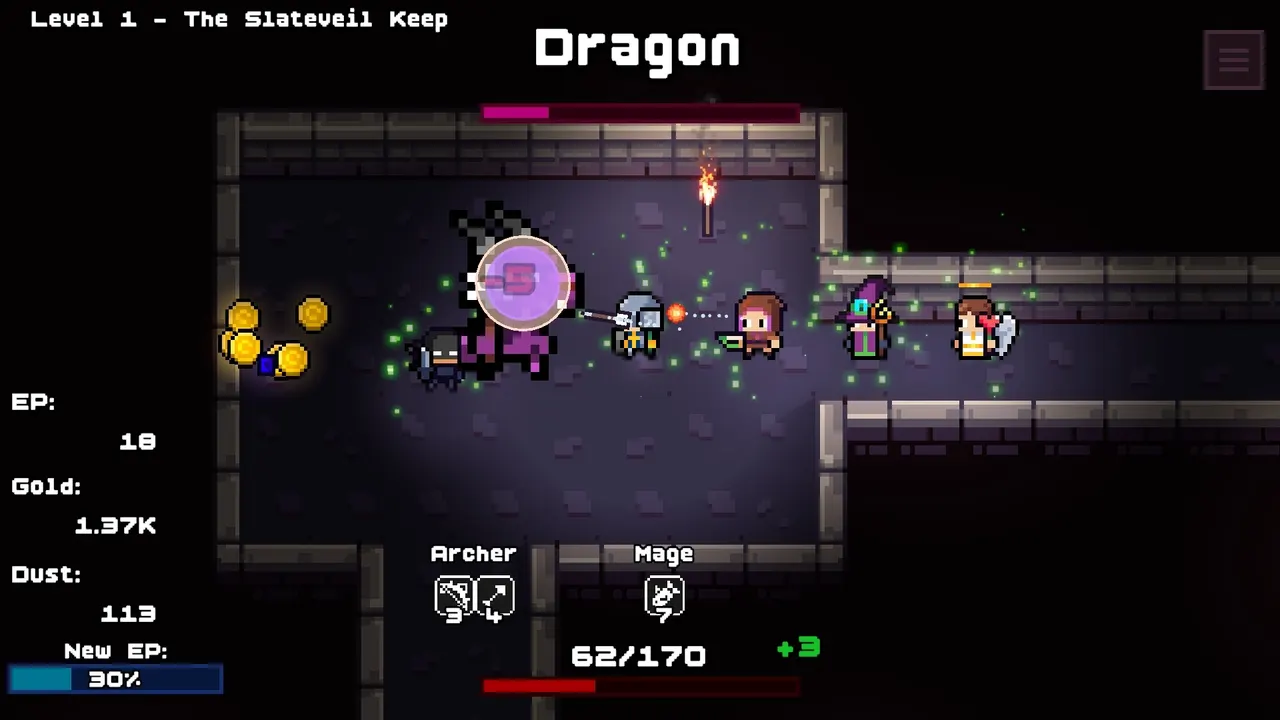
Later footage shows what Rogue play matures into: critical-damage nodes, clone setups, and active-skill rotations used together across multiple videos. The critical-damage line fits the hero's official description — a damage-focused hero scales fastest through crit — while the clone setups add bodies to a fight, and the active rotation keeps Flash Strike cycling. Cooldown reductions for Flash Strike are mentioned in footage, though exact values are not established anywhere, so treat cooldown as a direction to push rather than a number to plan around. The cooldown page follows the same evidence rules, and a dedicated Rogue gameplay video shows the clone setups in action.
The honest caveat about this section: Rogue has the shortest observation window of any hero on this site, because the full release is days old as of this writing. The patterns below repeat across several videos, but expect the community's understanding of the Loop Dungeon Incremental Rogue to sharpen over the coming weeks.
How a Rogue Build Comes Together
A Rogue needs the party around it even more than most damage heroes, because the observed kit spends its own survivability for output. The pattern in working footage runs: a Warrior front line absorbing the waves, a Priest covering the regen, and the Loop Dungeon Incremental Rogue free to commit to crit and active damage. From there the build order that appears in later videos is critical-damage nodes first, then the clone setups once the tree opens them, with the active skill riding cooldown picks as they appear.
| Build step | What the footage shows |
|---|---|
| Foundation | A Warrior front line plus Priest sustain |
| First picks | Critical-damage nodes |
| Mid build | Clone setups once the tree opens them |
| Ongoing | The active skill riding cooldown picks |
Two practical notes from the footage. First, Rogue damage arrives in bursts, so boss windows matter more for Rogue than for the Archer's steady output — time the buffs, then commit. Second, in at least one run, Rogue clone setups appear in a Necromancer attempt, where the fight turns into a shield-then-health grind; clones plausibly help there, but that single observation is all the current evidence supports. The necromancer page covers that fight's mechanics separately.
Common Rogue Mistakes
The mistakes are predictable from the kit.
| Mistake | Why it fails |
|---|---|
| Building Rogue as a front line | Nothing in the kit suggests the survivability for it |
| Skipping sustain to fund crit nodes | The run ends before the damage pays |
| Copying exact cooldown or crit numbers | Those values were never established |
A Loop Dungeon Incremental Rogue build copied wholesale from a demo video fails for an even simpler reason: the hero was not in the demo. Build for the shape of the kit, re-check tooltips in your own tree, and let the party carry the survivability the Rogue trades away.
Frequently Asked Questions
Q: Was the Loop Dungeon Incremental Rogue in the demo?
No, and the footage is explicit about it. Demo footage labels Rogue as full-version content, which means demo players met Rogue for the first time at launch. If your build plan comes from a demo video, double-check the hero roster before copying it — Rogue-based setups simply did not exist on that side of the boundary.
Q: What is the difference between Blink Attack and Flash Strike?
Blink Attack is the official name from the developer's launch announcement, describing Rogue as a damage-focused hero with Blink Attack. Flash Strike appears in early full-game footage as part of Rogue play. Both belong to the same discussion of the Rogue's active kit; the footage does not establish a precise relationship beyond showing both names around the same hero.
Q: Do Rogue clones work on bosses?
Once, observably: one run shows clone setups in a Necromancer attempt, where a shield below the boss health bar must be depleted before HP can be damaged. That is the entire current evidence, so treat clones as promising for shield fights rather than proven. More launch footage will settle it, and the bosses hub tracks the fights themselves.
Q: How does the Loop Dungeon Incremental Rogue change party building?
It adds a burst slot the roster did not have. The Warrior-Priest-Archer core covers holding, healing, and steady damage; Rogue covers the window where a big health bar needs to disappear, alongside the Mage Meteor. The heroes hub shows how the five documented heroes split those roles.
Continue exploring
Guide →
Loop Dungeon Incremental Builds: Spending Order, Parties, and Prestige
Loop Dungeon Incremental builds explained: skill-tree spending order, hero roles, crit and Meteor setups, and what prestige resets change.
Guide →
Loop Dungeon Incremental Gameplay Guide: What One Run Looks Like
How Loop Dungeon Incremental gameplay flows at launch: automatic combat, click assists, treasure chests, wave upgrades, and what prestige changes.
Related Guides
Up next →
Loop Dungeon Incremental Warrior Guide: Front Line, Upgrades, and the Buff
The Loop Dungeon Incremental Warrior anchors every run: front-line usage, attack and defense nodes, attack speed, and the Battle Cry boss buff.
Archer Guide
The Loop Dungeon Incremental Archer brings ranged damage: Triple Arrow for packs, Piercing Arrow for lines, attack-speed nodes, and the Ranger question.
Archmage Label
Archmage appears near Mage and Meteor upgrades in Loop Dungeon Incremental footage. What the title means, what remains unconfirmed, and smarter Mage picks.
Heroes Hub
The confirmed Loop Dungeon Incremental heroes at launch: Warrior, Priest, Archer, Rogue, and Mage, plus the Ranger and Archmage naming questions.
More in Heroes
- Loop Dungeon Incremental Archer Guide: Triple Arrow, Piercing Arrow, Speed
- Loop Dungeon Incremental Archmage: What the Mage Upgrade Labels Show
- Loop Dungeon Incremental Heroes: Confirmed Roster, Roles, and Name Questions
- Loop Dungeon Incremental Mage Guide: Meteor Timing and Burst Windows
- Loop Dungeon Incremental Priest Guide: Healing, Activate, and the Aura
- Loop Dungeon Incremental Ranger: Archer Branch Label or Hidden Hero?
- Loop Dungeon Incremental Warrior Guide: Front Line, Upgrades, and the Buff