
Loop Dungeon Incremental Movement Speed: Close the Gap Before It Ends Your Run
✓ Last verified 2026-10-20 · How we check facts
Quick answer
Movement Speed upgrades make the party reach enemies and bosses faster before health-drain effects can end a run. Presenters treat it as both pacing and survival, and no caption fixes an exact value.
Your party walks while the clock and the health bar do not wait. Movement Speed is the upgrade that closes that gap: demo and beta footage shows players picking Loop Dungeon Incremental movement speed nodes so the party reaches enemies and bosses faster before health-drain pressure ends a run. Treated purely as convenience, the stat looks optional; treated as survival, it changes how long your party lasts. This page explains what Loop Dungeon Incremental movement speed changes, when it matters most, and why recorded runs keep returning to it.
What Loop Dungeon Incremental movement speed changes
The node lives among the early progression picks, and its effect is exactly what the name promises: the party crosses the dungeon at a higher pace. That sounds like a quality-of-life tweak until you remember how a run actually decays. Pressure effects drain health while the party is in transit, so every second spent walking is a second of attrition with nothing hitting back. Faster movement shortens the unprofitable part of the loop and delivers the party to the profitable part with more health intact.
| Effect on screen | Why it matters | Version label |
|---|---|---|
| Less walking between packs | Shorter dead time where only drain applies | Demo and beta footage |
| Bosses reached sooner | Arrivals happen before run-ending pressure stacks | Demo and beta footage |
| Faster loop rhythm | More fights per minute of play | Observed across runs |
Why speed is a survival stat, not a luxury
The clearest way to see the value is to watch what presenters do when a run starts bleeding. The response recorded again and again is to move faster, not to hit harder: reaching the next fight, the next chest, or the boss itself becomes the priority because standing still is the one thing a draining party cannot afford. In at least one recorded run, the presenter frames the movement pick explicitly as a race against the health drain that would otherwise end the attempt.
| Run state | What players prioritize | Recorded outcome |
|---|---|---|
| Healthy and clearing | Normal pacing, speed as mild acceleration | Steady progress |
| Draining toward a wall | Speed picks to reach the boss or safety first | Run continues instead of bleeding out |
| Farming stretches | Faster transit between packs and pickups | More resources per minute |
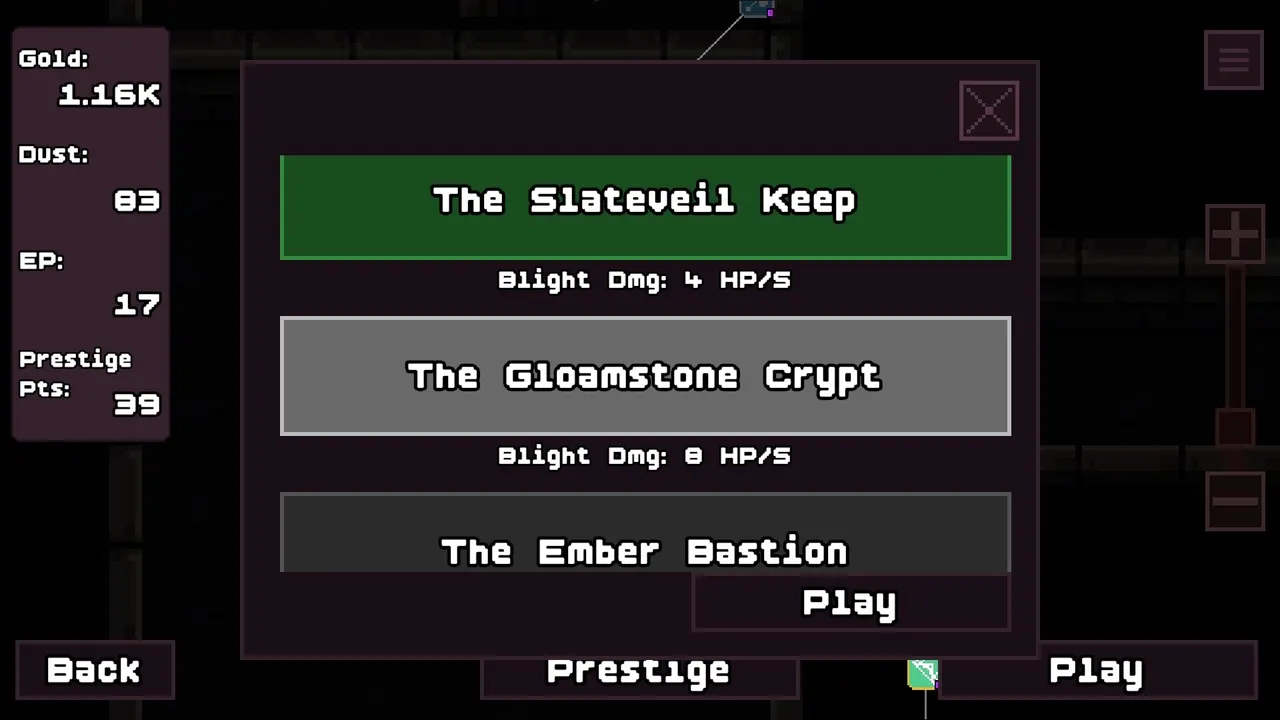
That middle row is the whole argument. Survival upgrades usually mean defense or healing, but in this game the clock is one of the enemies, and movement speed is the counter. You can watch the drain-race dynamic play out start to finish in a recorded completion run, and the mode structure described on the official Loop Dungeon site explains why every dungeon repeats the same walk-fight-walk rhythm.
Where speed pays off most
Three situations reward the stat more than the rest of the loop:
| Situation | Why speed helps | Related reading |
|---|---|---|
| Boss attempts | Arrive with health the drain would have eaten | Boss defense page |
| Wave-heavy farming | Shorter transit between oversized waves | Wave tuning page |
| Loop restarts after prestige | Back-to-back cycles finish sooner | Prestige page |
The boss case is the sharpest. Health-drain pressure and boss timers interact badly for slow parties, so presenters buy movement before Demon and Dragon attempts rather than after failing them. For farming, the value is quieter but constant: a wave build that adds enemies also adds walking distance between them, and speed claws some of that cost back. The Loop Dungeon Incremental movement speed sibling pages on the Loop Dungeon Incremental wave trade and the Loop Dungeon Incremental boss defense preparations cover both ends of that rhythm.
How much is enough
No tracked caption fixes an exact per-level value for movement speed, and observed tooltips have varied across footage versions, so plan by feel rather than by formula:
| Sign | What it suggests | Suggested response |
|---|---|---|
| Fights end fast but loops feel slow | Transit dominates your time | Add movement levels |
| Party dies mid-transit to drain | Survival race is being lost | Add movement before more offense |
| Boss attempts fail at the door | Arrival health is too low | Pair speed with defense and healing |
Treat those as the same judgment calls the recorded presenters make, not as rules with numbers attached. If the developers ever publish concrete values, the official Steam news feed is where they will land first.
Frequently Asked Questions
Q: What does Loop Dungeon Incremental movement speed actually do?
It raises the pace at which your party crosses the dungeon, so you reach enemies, chests, and bosses sooner. Demo and beta footage shows Loop Dungeon Incremental movement speed bought specifically to beat health-drain effects that would otherwise end a run.
Q: Is movement speed worth buying over damage upgrades?
Presenters treat the two as answers to different problems. Damage shortens fights; movement shortens everything else. When a loop bleeds time or health in transit, speed is the recorded fix, and when fights themselves stall, offense is.
Q: Does movement speed help against bosses?
Yes, indirectly. Arriving at the boss with more health preserved is the observed benefit, and players combine it with defense and healing before difficult attempts rather than relying on pace alone.
Q: Is there a known cap or exact value per level?
No tracked caption establishes either. Judge the stat by loop pacing on your own save, and check the official Steam news feed first if concrete numbers ever ship.
Continue exploring
Guide →
Loop Dungeon Incremental Gameplay Guide: What One Run Looks Like
How Loop Dungeon Incremental gameplay flows at launch: automatic combat, click assists, treasure chests, wave upgrades, and what prestige changes.
Bosses →
Loop Dungeon Incremental Demon Boss Guide: Invincibility Aura, Healing, and Timed Buffs
The Loop Dungeon Incremental demon boss sits deeper than Dragon. See how players layer Invincibility Aura, healing, and timed buffs for the attempt.
Items →
Loop Dungeon Incremental Treasure Chest Guide: Gold, Dust, and Loop Value
What a Loop Dungeon Incremental treasure chest holds, when chests appear in runs, and how Gold and Magic Dust payouts become tree upgrades.
Related Guides
Up next →
Loop Dungeon Incremental Prestige Explained: Resets, Rewards and Timing
How Loop Dungeon Incremental prestige works: what resets, what you keep, when to pull the trigger, and one post-reset skill-lock report to know.
Attack Speed
Loop Dungeon Incremental attack speed nodes sit on separate Warrior and Archer branches. Why presenters buy them early and what pairs well.
Aura Guide
How the Loop Dungeon Incremental aura effect works: the Priest branch's Invincibility Aura, its demo and beta window, and how players use it on bosses.
Boss Defense
Loop Dungeon Incremental boss defense is bought before Dragon and other boss attempts. When to invest, what pairs with it, what captions never show.
More in Combat
- Loop Dungeon Incremental Attack Speed: Why Faster Heroes Clear More
- Loop Dungeon Incremental Aura Guide: Invincibility Aura, Defense Windows, and Boss Prep
- Loop Dungeon Incremental Boss Defense: Survive the Dragon and Beyond
- Loop Dungeon Incremental Click Damage: Manual Hits in an Auto Battler
- Loop Dungeon Incremental Combat Guide: Every Upgrade That Shapes a Run
- Loop Dungeon Incremental Cooldown Guide: Active Skill Timers, Reductions, and Boss Timing
- Loop Dungeon Incremental Critical Hit: What Launch Footage Confirms
- Loop Dungeon Incremental Drop Rate Guide: Gold, Magic Dust, and Farming Levers
- Loop Dungeon Incremental Prestige Explained: Resets, Rewards and Timing
- Loop Dungeon Incremental Wave Upgrades: More Enemies, More Loot, More Risk