
Loop Dungeon Incremental Critical Hit: What Launch Footage Confirms
✓ Last verified 2026-10-20 · How we check facts
Quick answer
Crit chance and crit damage upgrades show up on several hero branches in the skill tree, and later footage features Rogue builds built around critical damage. No caption establishes the exact formula.
Big numbers win loops in Loop Dungeon Incremental, and few nodes promise them like the critical branch. Crit chance and crit damage upgrades, the Loop Dungeon Incremental critical hit pair, appear across several hero branches of the skill tree, while the captions never spell out an exact formula. This page gathers what launch-period footage actually shows: where the nodes live, which heroes lean on them hardest, and how to judge the investment when the game itself stays quiet on the math.
Where Loop Dungeon Incremental critical hit nodes appear
The tree does not reserve crits for one hero. Demo and later footage shows chance and damage nodes distributed across multiple hero branches, sitting beside the attack and speed picks each hero already has. That placement signals intent: crits are a layer you add to a hero you already build, not a standalone path you unlock once.
| Placement | What it looks like | Version label |
|---|---|---|
| Several hero branches | Crit chance and damage nodes beside core picks | Demo and later footage |
| Not a single global node | Each hero scales crits through its own line | Demo and later footage |
| No formula on screen | Captions never define chance or multipliers | All available runs |
Because the nodes live inside hero lines, your crit investment follows your party order. A hero you feed early gets crits early; a hero you unlock later waits its turn like everything else on its branch.
Which heroes lean on crits
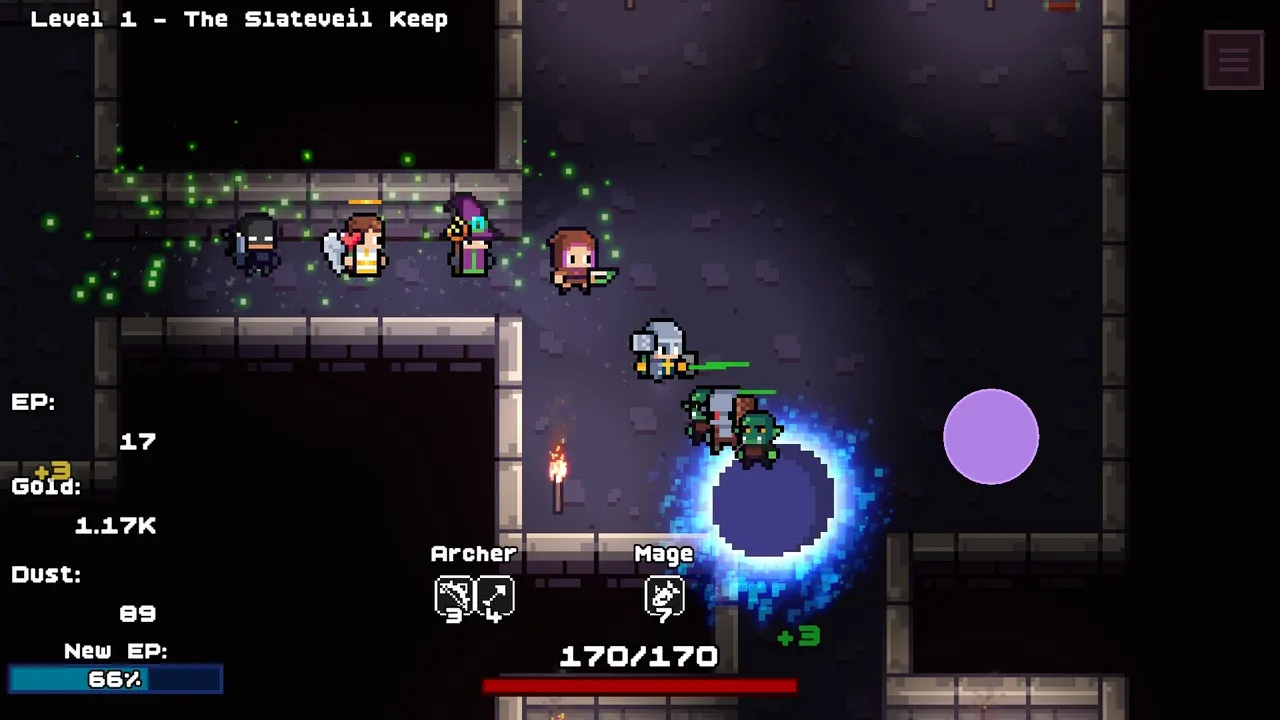
One hero dominates the Loop Dungeon Incremental critical hit conversation in recorded runs. Later footage repeatedly features Rogue setups built around critical damage, with players combining the crit line into active-skill and clone configurations that swing hardest when a big hit connects. The Loop Dungeon Incremental rogue page follows those builds in detail, and a full skill-tree playthrough from the demo period shows the broader node landscape the crit lines grow out of.
| Hero evidence | What recordings show | Confidence |
|---|---|---|
| Rogue critical-damage setups | Later runs stack crit nodes into active builds | Multiple recorded sessions |
| Other branches | Crit nodes exist but draw less commentary | Nodes visible, strategies thinner |
That does not make Rogue the only crit hero; it makes Rogue the one the footage documents. Treat any other hero's crit potential as your own experiment rather than settled doctrine.
What the captions do not establish
Discipline matters more here than on most pages, because crit is exactly the kind of system players invent numbers for. The table below is the honest state of Loop Dungeon Incremental critical hit knowledge from the available recordings:
| Question | Footage status | Practical read |
|---|---|---|
| Base critical chance | Never shown in a caption | Measure from your own damage spikes |
| Crit damage multiplier | No value recorded | Compare output before and after a node |
| Chance versus damage priority | No official guidance | Test on the hero you actually buff |
Two habits keep you honest. First, ignore exact percentages quoted from older videos, since tooltip values have varied across footage versions throughout the demo and beta period. Second, judge every crit purchase by observation: pick a loop, note how often big hits appear, buy the node, and run the same loop again. The delta you see matters more than any number nobody can source.
How to use crit nodes without the math
The footage may not publish formulas, but it does show a workable decision pattern:
| Situation | What recorded players do | Why it fits |
|---|---|---|
| A damage hero already carries buffs | Add crit nodes on top | Multipliers reward an established base |
| Early loops with thin trees | Delay crit investment | Fewer hits per second means fewer crit rolls to gain from |
| Boss attempts | Keep crits on the damage carrier, not the front line | Survival picks cover the Warrior line instead |
The pattern mirrors how the community treats damage upgrades generally, and our Loop Dungeon Incremental builds guide collects those habits in one place. Archer players weighing crits against multi-arrow picks can cross-check the Loop Dungeon Incremental piercing arrow progression page, which covers the other big single-hit scaler in the tree.
Frequently Asked Questions
Q: How does Loop Dungeon Incremental critical hit chance work?
The captions never define the formula, so no exact chance or multiplier can be quoted responsibly. What the tree shows is a chance and damage pair on several hero branches, and what recordings show is players verifying results by watching their own damage spikes.
Q: Which hero should I build crits on?
Rogue is the best documented: later runs repeatedly stack critical damage into Rogue active-skill setups. Other branches carry crit nodes too, so a favorite hero is a fair experiment, just not a documented one.
Q: Are crit numbers different between the demo and the full game?
Loop Dungeon Incremental critical hit tooltips have varied across footage versions during the demo and beta period, so treat any specific figure from an old video as outdated. Judge the nodes on your own current save.
Q: Do critical hits work with attack speed upgrades?
The footage pairs them often without quantifying the interaction: more attacks per second simply means more chances for a big hit. Build both on the same hero and let your own loop times tell you whether the combination pays.
Continue exploring
Heroes →
Loop Dungeon Incremental Rogue Guide: Blink Attack, Flash Strike, Crit Builds
The Loop Dungeon Incremental Rogue is the full-release damage hero: Blink Attack officially, with Flash Strike and crit and clone setups in footage.
Guide →
Loop Dungeon Incremental Builds: Spending Order, Parties, and Prestige
Loop Dungeon Incremental builds explained: skill-tree spending order, hero roles, crit and Meteor setups, and what prestige resets change.
Progression →
Loop Dungeon Incremental Piercing Arrow Guide: Line Damage and Buff Combos
How the Loop Dungeon Incremental piercing arrow works: shots through multiple enemies, its full-game lock, and the Warrior buff pairing.
Related Guides
Up next →
Loop Dungeon Incremental Drop Rate Guide: Gold, Magic Dust, and Farming Levers
What gameplay shows about the Loop Dungeon Incremental drop rate upgrades for Gold and Magic Dust, plus the farming levers that make each run richer.
Attack Speed
Loop Dungeon Incremental attack speed nodes sit on separate Warrior and Archer branches. Why presenters buy them early and what pairs well.
Aura Guide
How the Loop Dungeon Incremental aura effect works: the Priest branch's Invincibility Aura, its demo and beta window, and how players use it on bosses.
Boss Defense
Loop Dungeon Incremental boss defense is bought before Dragon and other boss attempts. When to invest, what pairs with it, what captions never show.
More in Combat
- Loop Dungeon Incremental Attack Speed: Why Faster Heroes Clear More
- Loop Dungeon Incremental Aura Guide: Invincibility Aura, Defense Windows, and Boss Prep
- Loop Dungeon Incremental Boss Defense: Survive the Dragon and Beyond
- Loop Dungeon Incremental Click Damage: Manual Hits in an Auto Battler
- Loop Dungeon Incremental Combat Guide: Every Upgrade That Shapes a Run
- Loop Dungeon Incremental Cooldown Guide: Active Skill Timers, Reductions, and Boss Timing
- Loop Dungeon Incremental Drop Rate Guide: Gold, Magic Dust, and Farming Levers
- Loop Dungeon Incremental Movement Speed: Close the Gap Before It Ends Your Run
- Loop Dungeon Incremental Prestige Explained: Resets, Rewards and Timing
- Loop Dungeon Incremental Wave Upgrades: More Enemies, More Loot, More Risk